

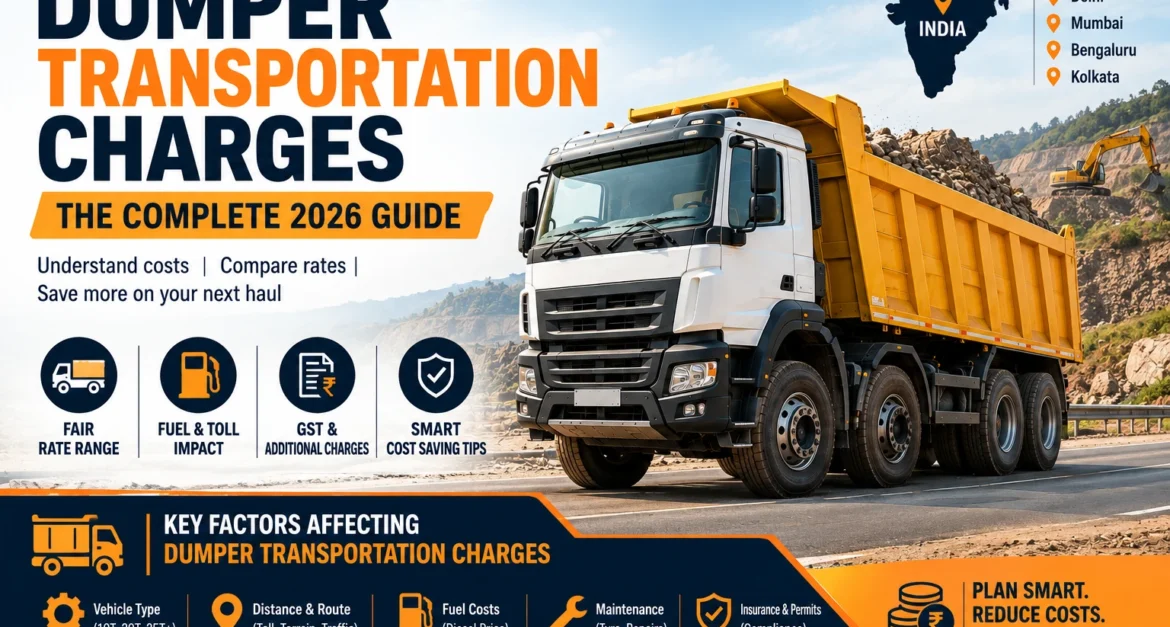
Two quotes for the same dumper transportation job can vary by thousands of rupees, and the difference is not always easy to understand. Dumper transportation charges depend on several factors, including fixed operating costs, fuel, tolls, distance, vehicle type, route conditions, and seasonal demand. A clear understanding of these factors can help you compare quotations more accurately and avoid unexpected costs.
This guide explains what influences dumper transportation charges in India, how distance and operating expenses affect the final rate, what additional charges may appear on the bill, and five practical ways to reduce transportation costs while maintaining reliable service for your construction or material transportation requirements.
What Determines Dumper Transportation Charges
Every transporter calculates a quote using two main cost categories, fixed costs and variable costs. Fixed costs can include vehicle payments, depreciation, insurance, permits, registration, and driver-related expenses. Variable costs change according to each trip and may include diesel, tolls, tyre wear, maintenance, and loading or unloading expenses. Understanding both categories helps you evaluate dumper transportation charges more accurately and identify the factors behind the final amount. Instead of comparing only the total price, consider how each cost contributes to the quotation and whether the services included match your transportation requirements.
Transporters may also include a profit margin after covering their operating expenses. The margin can vary depending on competition, route demand, truck availability, and the likelihood of securing another load. Busy routes with traffic moving in both directions may have more competitive pricing because several trucks are available for the same type of work. Distance is another important factor affecting dumper transportation charges. Short-distance trips can have a higher cost per kilometre because fixed expenses are spread over fewer kilometres. Longer routes may distribute these costs across more kilometres, although fuel, tolls, maintenance, and route conditions still affect the final rate.
Fixed Costs Behind Dumper Transport Rates
Fixed costs remain largely unchanged whether a dumper is operating on the road or sitting idle for a day. These expenses create the baseline used to calculate dumper transportation charges for each trip. Common fixed expenses include vehicle EMI or depreciation, which can range from ₹20,000 to ₹65,000 per month depending on the truck. Driver and cleaner salaries may range from ₹18,000 to ₹58,000 per month, including allowances for longer routes. Insurance can cost around ₹30,000 to ₹80,000 annually, while permits, registration, and fitness certificates may add ₹15,000 to ₹50,000 each year.
Because these expenses continue even when a dumper completes fewer trips, operators need to recover their fixed costs through the trips they undertake. This directly affects dumper transportation charges, especially when vehicle utilization is low. A dumper completing many trips each month can spread its fixed expenses across more bookings, while a vehicle completing fewer trips may need a higher charge per trip. Fuel and route expenses are not the only factors behind a quotation. Vehicle ownership costs, driver expenses, insurance, permits, and regulatory requirements also contribute to the final rate that customers receive from transporters.
Variable Costs That Affect Dumper Transport Costs
Variable costs change directly with each trip and depend on factors such as distance, route conditions, cargo weight, and fuel consumption. These expenses have a direct impact on dumper transportation charges. Diesel is usually the largest variable expense because fuel consumption changes with mileage, traffic, terrain, and state-wise fuel prices. Tolls can also add a significant amount to long interstate routes. For example, a route from Delhi to Mumbai may involve several toll payments. Tyre wear and routine maintenance also increase with distance, vehicle load, and road conditions, adding to the overall transportation cost.
Loading and unloading labour is another variable expense that can affect dumper transportation charges. Depending on the material, handling requirements, and shipment conditions, labour costs may range from around ₹500 to ₹2,500 per shipment. When fixed and variable expenses are considered together, they create the basic cost level below which a transporter may find it difficult to operate profitably. A quotation that appears significantly lower may involve factors such as a return-load opportunity or different loading arrangements. Customers should therefore compare the complete quotation, including fuel, tolls, labour, maintenance, and other applicable expenses, before making a decision.
Typical Dumper Transport Rates by Distance
The table below gives a general sense of how dumper transportation charges scale with distance, based on typical industry rate patterns for full truck load bookings.
| Distance Band | Typical Vehicle Class | Approximate Charge Range |
| Under 300 km | Mini truck / small tipper | ₹4,000 – ₹15,000 |
| 300 – 700 km | Medium truck (14ft–20ft) | ₹12,000 – ₹35,000 |
| 700 – 1,500 km | Large truck (20ft–32ft) | ₹25,000 – ₹55,000 |
| 1,500 km and above | 32ft container / heavy tipper | ₹45,000 and above |
These are indicative ranges. Actual rates depend on truck availability, return loads, road conditions, and the season you are booking in.
What’s Included in the Final Bill
A quoted trip rate does not always show the complete cost of transportation. Several additional charges may appear when the final invoice is prepared, which can affect dumper transportation charges. The base freight charge generally covers the vehicle, driver, and fuel required for the agreed route. Loading and unloading charges may be included in this amount or billed separately, depending on the transporter and shipment terms. GST can also apply according to the applicable billing arrangement. Cargo insurance may be offered as an optional service, with the premium calculated according to the declared value of the transported material.
Detention charges are another cost that customers should consider when calculating dumper transportation charges. These charges may apply when loading or unloading takes longer than the agreed free waiting period. Depending on the arrangement, detention can add around ₹1,000 to ₹3,000 per day. Before confirming a dumper booking, ask the transporter for a complete quotation that clearly lists the base freight, handling charges, taxes, insurance, waiting charges, and any other applicable fees. Checking these details in advance makes it easier to compare quotations accurately and helps prevent unexpected charges from appearing on the final transportation bill.
Why Charges Change by Season and Route
Geography and demand can have a direct impact on dumper transportation charges. High-volume corridors with strong traffic in both directions may offer more competitive rates because transporters have better opportunities to secure loads. Similar-distance routes with lower demand or limited competition can cost more. Routes serving less-connected districts or hill stations may also have higher per-kilometre costs because finding a return load can be difficult. When a truck is likely to travel back empty, the transporter may need to include the cost of that empty return journey in the outward trip quotation.
Seasonal demand can also influence dumper transportation charges throughout the year. Three periods commonly mentioned in the article are the festive season around October and November, harvest months from March to May, and the monsoon period from June to September. During these periods, higher demand or longer transit times can affect transportation rates on certain routes. Rates may increase by around 15 to 20 percent during busy periods. Planning transportation in advance and booking a few days before an expected demand increase can help customers manage costs and avoid paying higher rates when vehicle availability becomes limited.
How to Reduce Dumper Transport Costs
Right-sizing the vehicle is one of the simplest ways to manage dumper transportation charges without reducing service quality. Choose a dumper that matches the actual quantity and type of material instead of paying for unused capacity. Helping the transporter arrange a return load can also reduce the cost of an empty return journey. Booking during periods of lower demand may provide more competitive rates, while confirming the loading time in advance can reduce waiting and idle-time charges. These practical steps help customers control transportation expenses while maintaining reliable service for their construction or material movement requirements.
Before negotiating, calculate an approximate cost floor for the route by considering distance, fuel, tolls, labour, and other applicable expenses. This gives you a clearer understanding of reasonable dumper transportation charges and makes it easier to evaluate different quotations. If a quote is significantly lower than expected, check what services or expenses may have been excluded. You can also discuss return-load opportunities, flexible scheduling, and confirmed loading slots with the transporter. Comparing complete quotations rather than focusing only on the headline price can help reduce unnecessary expenses and prevent unexpected charges on the final bill.
Where to Find Dumper Rental Providers Online
Online directories are a useful way to compare local providers before you commit to a booking. IndiaMART’s Delhi tipper services directory lists several dumper and tipper rental businesses operating in and around the capital, with a range of monthly and daily pricing options.
For a deeper look at how the cost structure behind dumper transportation charges is calculated, TruckGuru’s guide to truck transportation charges walks through fixed and variable costs in detail, while FR8’s breakdown of truck transport charges shows how per-kilometre rates shift with distance using real trip data.
Conclusion
Dumper transportation charges are not arbitrary. They reflect a real cost structure built from fixed costs, variable costs, distance, season, and route demand.
Understanding this structure tells you what counts as a fair rate, what is unusually cheap for a reason, and where you actually have room to negotiate. Comparing quotes on the same terms, rather than by headline price alone, is the simplest way to avoid overpaying.
How Dumper Transport Can Help
If you want dumper transportation charges that are transparent from the first quote, Dumper Transport connects contractors and site managers with well-maintained dumper trucks across India.
With over 10 years of experience, clear pricing, and support for loading, unloading, and warehousing coordination, Dumper Transport removes the guesswork of comparing scattered local listings and unclear rate breakdowns.